Ever wonder why one part of Branford feels like a classic New England village, while another feels like a shoreline cottage community? If you are buying or selling in Branford, that mix matters because the home styles you see often reflect the town’s history, setting, and development patterns. Understanding those architectural layers can help you better read the market, picture where you want to live, and appreciate what makes Branford distinct. Let’s dive in.
Why Branford Has So Much Variety
Branford is not a one-style town. According to the town’s community and historic district materials, its building stock reflects nearly every period of local development, from early village homes to shoreline resort cottages and later suburban construction.
That variety shows up in the numbers too. About 19.4% of Branford’s housing units were built in 1939 or earlier, 19.9% were built in the 1980s, and only 2.8% were built in 2010 or later. In practical terms, that means you are more likely to see a layered housing landscape than a town filled mostly with brand-new homes.
Branford Center Homes
Branford Center is the place where you most clearly see the town’s historic roots. The area, roughly bounded by Route 1, the Branford River, and Monroe and Kirkham Streets, developed from an 18th-century Connecticut farming and maritime village into the core of a small coastal town.
As you walk or drive through this part of Branford, you may notice a wide range of older architectural styles. Town records describe the district as including Colonial, Federal, Greek Revival, Italianate, Queen Anne, Colonial Revival, Tudor Revival, and Bungalow buildings.
Colonial and Federal Roots
If you picture a traditional New England village house, you are often thinking of the Colonial or Federal influence found in Branford Center. These homes help define the area’s older street patterns and long-standing village character.
For buyers, this part of town often feels more historic and established than suburban. The appeal is less about one single look and more about continuity, scale, and the sense that the neighborhood grew over time rather than all at once.
Later Revival Styles
Branford Center is not limited to the earliest house forms. Later additions introduced Greek Revival, Italianate, Queen Anne, Colonial Revival, Tudor Revival, and Bungalow examples, which gives the area visual depth and variety.
That means two homes on the same general stretch may have very different personalities. One may read as simple and traditional, while another may have more decorative detailing or a distinctly early-20th-century look.
Canoe Brook Homes
Canoe Brook adds to Branford’s older-house story. Centered around Main, Bradley, and Cherry Hill Roads, this district is made up mostly of wood-frame single-family homes, many of which began as early Colonials.
Over time, some of those homes gained Federal or Greek Revival details. The district also includes later Queen Anne, Colonial Revival, and Tudor Revival houses, reinforcing the sense that this is one of Branford’s most historically layered residential areas.
What Buyers Notice Here
If you are drawn to homes with long local history, Canoe Brook is one of the places where that character is especially visible. The streetscape tends to feel rooted in an older pattern of development, with house forms that reflect multiple eras rather than a single building boom.
For sellers, that kind of setting can be part of the story. Buyers often respond to context, and in Canoe Brook, the context is one of traditional New England architecture and a well-established residential fabric.
Shoreline Cottage Neighborhoods
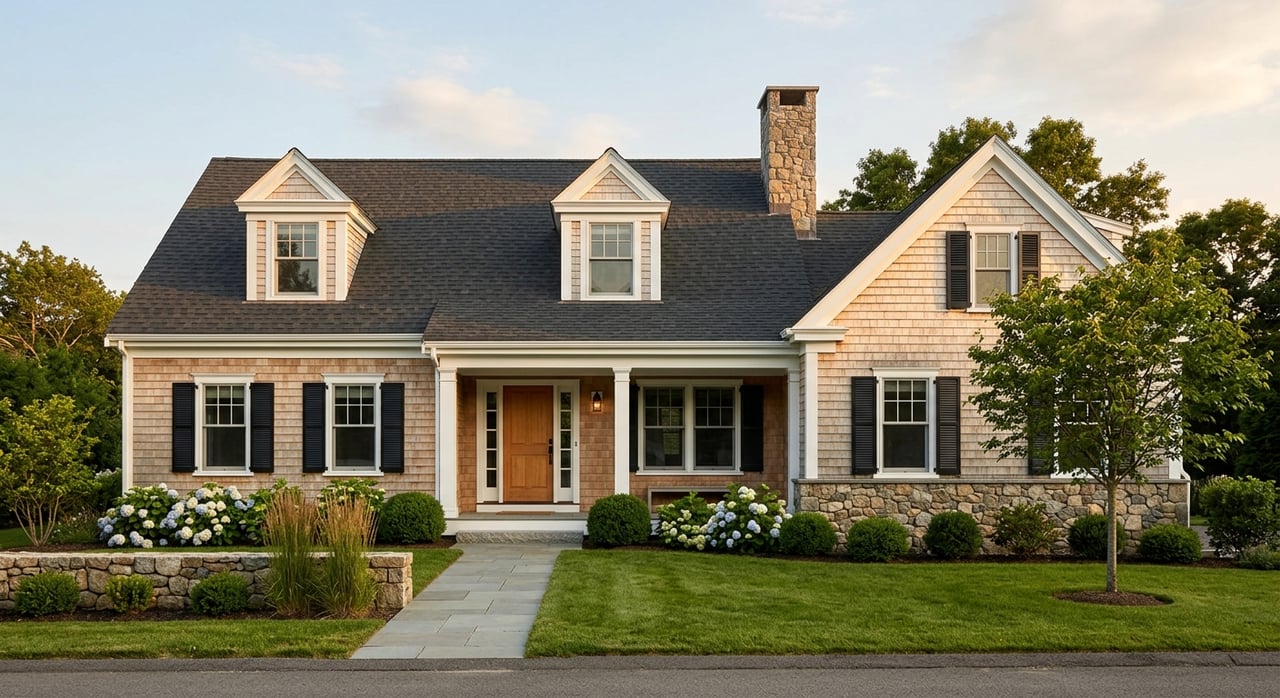
If Branford Center and Canoe Brook represent the historic village side of town, the shoreline neighborhoods show off Branford’s coastal-cottage identity. These areas are closely tied to late-19th- and early-20th-century resort and summer-colony development.
Across several shoreline districts, the common themes are smaller scale, orientation toward the water, and a strong sense of place. You are not just seeing houses. You are seeing a piece of Branford’s coastal history.
Branford Point Styles
Branford Point reflects residential development from the Revolutionary era through World War II. The district includes late Federal, Greek Revival, Italianate, Second Empire, Stick, Queen Anne, Arts and Crafts/Bungalow, Shingle, and Colonial Revival styles.
It also includes late-19th- and early-20th-century waterfront cottages. At the same time, the edges of the district were shaped by postwar construction, which helps explain why this area can show both historic shoreline character and a later residential layer.
Short Beach Cottages
Short Beach began as a seasonal destination in the late 19th and early 20th centuries. Historic district materials describe its buildings as mostly minimally ornamented wood-frame structures oriented toward the water.
That gives the area a compact beach-community feel. For buyers, this often reads as informal, coastal, and closely tied to the shoreline landscape rather than to large-lot suburban development.
Pine Orchard and Indian Neck
Pine Orchard developed as a 19th-century resort community between Indian Neck and Stony Creek. The Pine Orchard Association notes that the neighborhood retains turn-of-the-century charm and includes private cottages and estates.
Indian Neck also grew as a summer resort area, with hotels and cottages around places such as Limewood Beach, Linden Avenue, Pawson Park, Haycock Point, and Hotchkiss Grove. Together, these areas help tell the story of Branford as a shoreline destination with longstanding seasonal and coastal appeal.
Stony Creek and Thimble Islands
In the southeastern part of Branford, Stony Creek and the Thimble Islands contain one of the region’s largest nearly intact collections of Stick-style houses and summer cottages. The district also includes Queen Anne, Shingle, Arts and Crafts, Colonial Revival, and other late-19th- and early-20th-century buildings.
What makes this area stand out is that the architecture connects closely to its maritime setting. Historic resources also note quarry-related workers’ houses, wharves, and quays, which reinforce the district’s working waterfront and coastal identity.
Postwar and Newer Homes
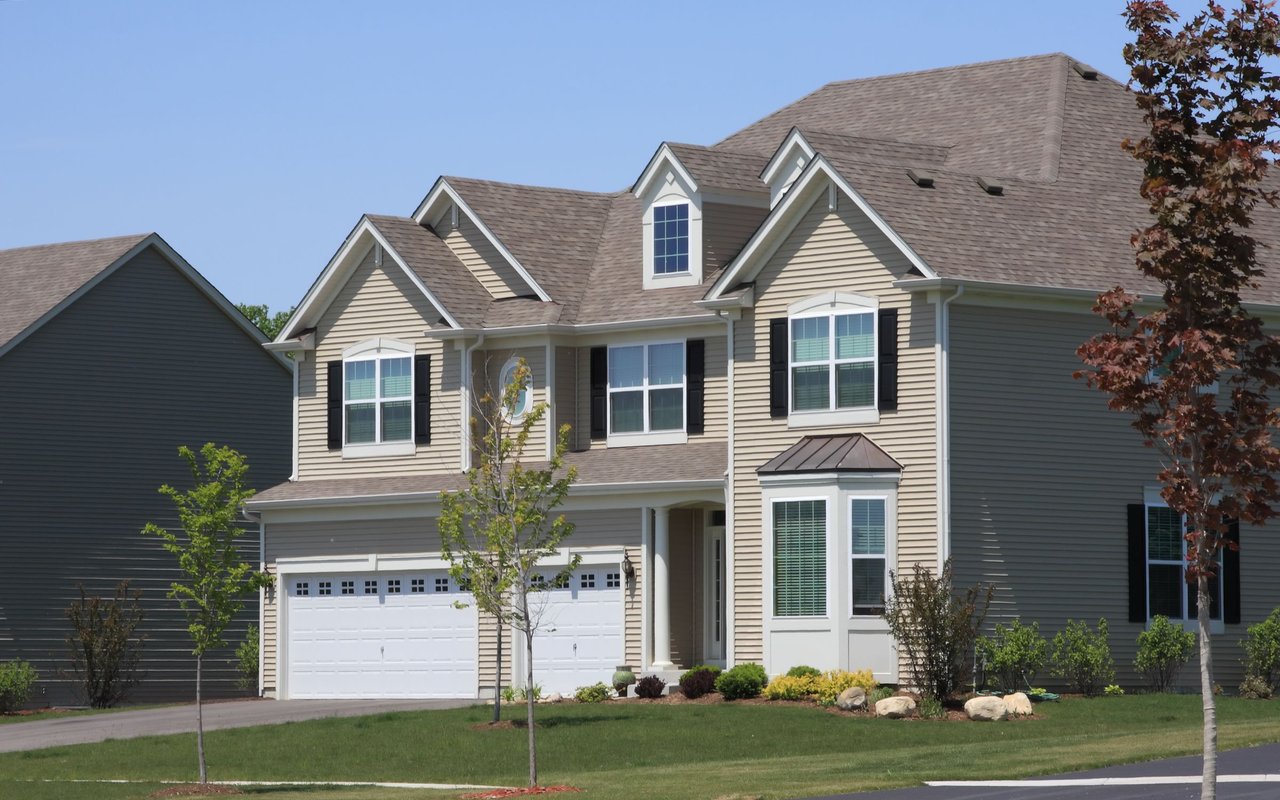
Not every home in Branford fits into a historic or cottage category. The town also has a later suburban layer, especially in postwar residential areas and infill locations outside the oldest historic cores.
Town housing data shows that the 1980s were the largest single building cohort in Branford. Only a small share of housing was built in 2010 or later, so newer-feeling homes are often more likely to come from later 20th-century development than from recent large-scale construction.
Where You See Newer-Looking Homes
In Branford Point, the district boundary itself is shaped in part by extensive post-1938 and post-World War II construction. Bryan Road is specifically described as a suburban-style residential subdivision, which offers a useful example of how later development entered the town’s older fabric.
In general, if you are looking for homes that feel more contemporary in layout or setting, you will often find them outside the preserved village core and outside the most historic shoreline summer-colony districts. That does not mean one option is better than another. It simply reflects Branford’s layered growth pattern.
How Home Style Affects Your Search
Knowing Branford’s architectural patterns can make your home search more focused. If you want a historic village setting, Branford Center and Canoe Brook may rise to the top. If you are drawn to coastal character, the shoreline neighborhoods may feel like a better fit.
If you prefer a later residential setting, postwar and newer pockets may offer the feel you want. In Branford, style and location are often closely connected, so understanding one usually helps you narrow the other.
Why This Matters for Sellers
For sellers, architecture is not just a design detail. It helps shape how buyers understand your home in the context of Branford.
A house in a village-center setting may appeal for its historic character and established location. A shoreline cottage or summer-colony home may stand out for its coastal identity and sense of place. A later home may attract buyers looking for a different layout, era, or neighborhood feel.
That is why thoughtful presentation matters. When your home’s style is clearly positioned within Branford’s broader architectural story, buyers can more easily see its value and what makes it distinctive.
Whether you are buying a coastal cottage, selling a village home, or trying to understand where your property fits in the local landscape, having a clear read on Branford’s architecture can make the process feel much more grounded. If you want local guidance on how a specific home or neighborhood fits into the Branford market, reach out to Claire Kilmer for personalized insight and hands-on support.
FAQs
What architectural styles are common in Branford Center?
- Branford Center includes Colonial, Federal, Greek Revival, Italianate, Queen Anne, Colonial Revival, Tudor Revival, and Bungalow buildings, according to the town’s historic district summary.
What kinds of homes are common in Branford shoreline neighborhoods?
- Branford’s shoreline areas are known for cottages, summer-colony homes, and other late-19th- and early-20th-century coastal houses, including Stick, Shingle, Queen Anne, Arts and Crafts, and Colonial Revival styles in some districts.
Where can you find older historic homes in Branford, CT?
- Older historic homes are most strongly associated with Branford Center and Canoe Brook, where district descriptions highlight early Colonials and other long-established house types.
Does Branford have many newly built homes?
- Town housing data shows that only 2.8% of Branford housing units were built in 2010 or later, so the town’s housing stock is generally older and more layered.
Where are postwar homes more common in Branford?
- Postwar and newer-looking homes are generally more likely to appear in later residential areas and infill locations outside the oldest historic cores and shoreline summer-colony districts.
Why do Branford neighborhoods look so different from each other?
- Branford developed in layers, with an older village center, shoreline resort neighborhoods, and later suburban residential areas, which is why different parts of town can have very different architectural character.