What does a bachelor farmer with no children do with sixty-four acres, six or seven cows, and a set of chicken coops he never quite managed to keep in good repair? Erwin Bauer's answer, in 1990, was to give the whole thing to the Town of Madison.
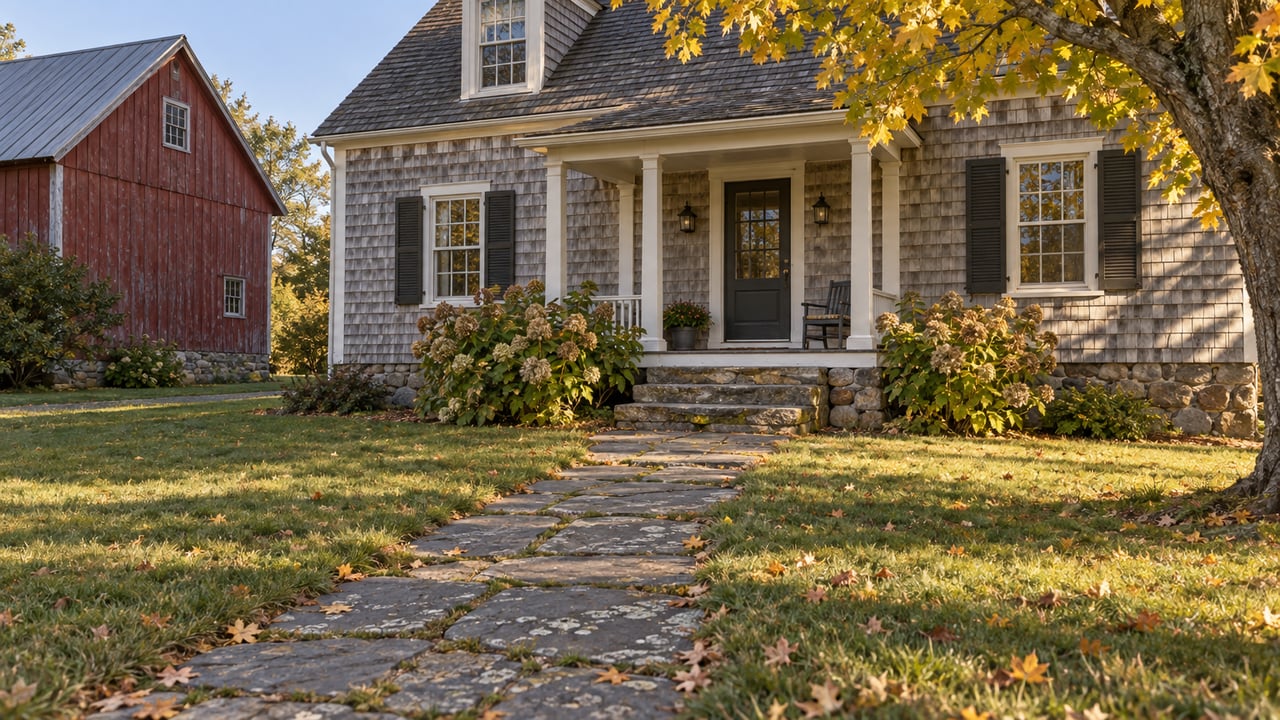
That gift is the reason Bauer Park Harvest Festival, set for Saturday, October 17 this year, doesn't feel like most town fairs. It isn't staged on a rented field or trucked in for the weekend. It happens on land that was farmed continuously from before Interstate 95 existed until the year the last Bauer brother died, and almost none of the buildings on it were built for a festival. They were built for a farm.
The gift with no strings
Erwin Bauer lived in the farmhouse at 257 Copse Road for most of his 92 years. He and his brother Anthony worked the land together, and according to the Town of Madison's own history of the property, neither brother ever married and neither had immediate family nearby to inherit the place. Anthony died in 1989. Erwin died in 1996, but not before deciding what would happen to the farm once he was gone: he handed it to the town rather than to a buyer, and Bauer Park was established the following year, in 1990.
The land itself carries two dates that matter more than most town histories bother to record. Erwin was home during the Great New England hurricane of 1938 and watched the ground around the property's sugar maples heave up and down under the wind, a detail preserved in the town's history page rather than a plaque. Twenty years later, in 1958, construction finished on I-95, which cut the Bauers' delivery time to the farmers market in New Haven, where they sold produce as truck farmers for years before the highway existed.
None of that history is roped off or reenacted for visitors. It's just still there, in the barn's post-and-beam frame and the farmhouse walls, because nobody ever tore them down to build something else.
What's still standing
The barn at Bauer Park is joined with mortises and tenons and held together with wooden pegs, the kind of post-and-beam construction that predates power tools on a farm this size. The town's own account notes the beams may be American chestnut, a species that's been functionally wiped out by blight for a century, which means the wood holding up the roof is older and rarer than almost anything else on the property.
Upstairs in the farmhouse, a Farm Museum holds the antique tools, furniture, and household items the Bauers actually used, some donated by Madison residents over the years and some by the family itself. A portion of the collection came from Tom Birnbaum, son of the late Dr. H.B. Birnbaum, who served as the Bauer brothers' physician. During harvest festivals, the farmhouse opens to the public specifically so visitors can see those tools on display, a detail the Bauer Park Advisory Committee has noted was arranged in memory of Dr. Birnbaum himself. The display tables were built by local high school construction students, which means even the museum's furniture has a small piece of Madison's own history attached to it.
This year's fair, exactly
The details for 2026 are set. The festival runs from 11 a.m. to 4 p.m. on Saturday, October 17, at the intersection of Copse Road and Hunter's Trail, and it happens rain or shine. It's organized jointly by the Bauer Park Advisory Committee and the Madison Beach and Recreation Department, the same pairing that has run it for years.
First Selectwoman Peggy Lyons described it plainly in a recent community update:
"It's a free, old-fashioned country fair at Madison's Historic Farm, Bauer Park."
The activities haven't drifted far from that description in years, and this year's lineup includes:
- Hay and pony rides
- Children's crafts
- Apple tasting and cider pressing
- Pumpkin painting
- A hay maze
- Live music
- A food tent
- Scarecrow making
- Local exhibitors
Last year's festival, held October 18, 2025, drew thousands of visitors over the course of a single afternoon, according to Patch's coverage of the event, and organizers have described it as one of the shoreline's most established community traditions. The park itself stays busy beyond festival day too. Its Community Gardens, tucked into the same 64.5 acres, remain one of the more popular uses of the property year-round, right alongside the trails and open space the town has maintained since taking ownership.
Why the difference shows up on the day itself
Walk a hay maze at most town fairs and you're walking through hay bales trucked in for the occasion. At Bauer Park, you're walking through a field that's part of a farm the town still manages as farmland, not just as festival grounds. The apple tasting and cider pressing aren't a vendor's table set up for the day. They're happening on the kind of property that used to send produce to New Haven before the interstate existed, on soil that had woodchucks and deer and crows to contend with long before anyone thought to build a hay maze on it.
That distinction is easy to miss if you're only there for the pony rides. But it's the reason the festival feels grounded rather than assembled, and it's the direct result of one decision Erwin Bauer made when he had every reason to sell instead. A working farm with no heir to inherit it usually becomes house lots. This one became a park the whole town gets to use every October.
Bauer Park's reason for surviving intact wasn't luck. It came down to one person's very specific decision about what was worth holding onto. If you're weighing a similar decision about a property in Madison, whether it's time to sell a home you've kept up for decades or to find the one you'll keep for the next several, Claire Kilmer can help you think it through. Get your free home valuation and start the conversation.